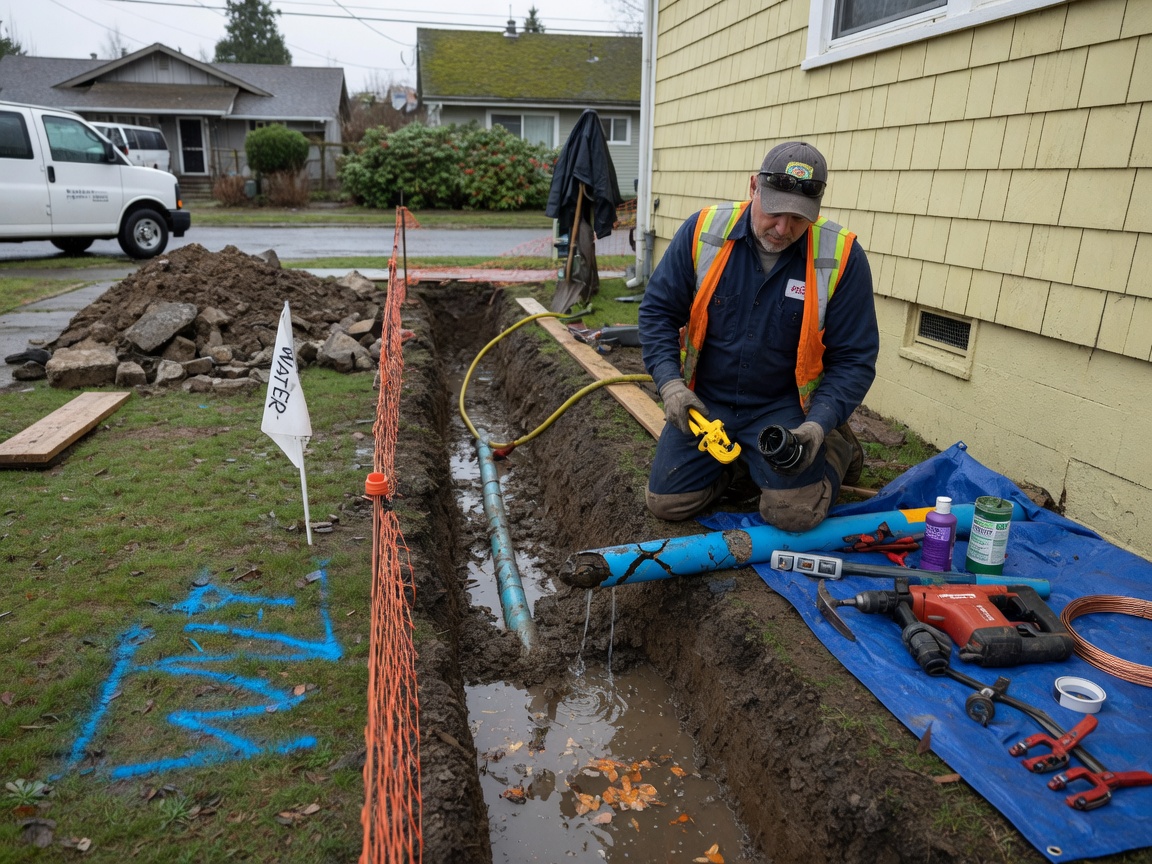
Puyallup's mild oceanic climate brings frequent rain that keeps soil saturated year-round, especially along the Puyallup River and in the Valley neighborhood. This constant moisture accelerates corrosion on older galvanized and copper lines common in homes built before the 1980s near the Fairgrounds and Meeker Mansion. Technicians must account for shifting ground that can reopen small leaks days after an initial fix.
Pierce County code requires permits for any excavation deeper than 12 inches on private property, and crews working near the river corridor often encounter high water tables that complicate shoring. In South Hill and Summit developments, tree roots from mature landscaping frequently wrap around service lines, creating slow leaks that only surface after heavy winter storms. Spot repairs here usually involve replacing a full section rather than patching to prevent recurrence.
Detection starts with acoustic listening and camera scoping because surface water from rain masks traditional pressure-test signs. Once the leak is isolated, crews prefer trenchless pull methods on straight runs to limit lawn damage in established neighborhoods, switching to open trench only when multiple joints or severe root intrusion are present.
Technician insight
In Puyallup, the thing that catches most people out with water line leak repair is how the constant rain keeps the ground soft enough that small leaks migrate and show up yards away from the actual break, especially on pre-1970 homes in Downtown Puyallup where galvanized lines run under mature landscaping.
Valley Neighborhood Main Line Leak
Homeowner noticed steadily rising water use after weeks of rain. Camera scoping revealed a pinhole leak on the galvanized line where roots from a cedar had entered near the Puyallup River. We pulled a new HDPE line through the existing path, restored the yard, and the meter has stayed stable through subsequent storms.
Water Line Leak Repair Services We Offer
✓Main Water Line Leak Repair
Locate and replace leaking sections of the primary service line from the meter to the foundation in older Puyallup homes.
✓Slab Leak Detection and Repair
Use acoustic and camera tools to find leaks under concrete slabs common in South Hill and Summit properties, then reroute or repair with minimal floor disruption.
✓Underground Leak Location
Pinpoint hidden leaks in yards and driveways using electronic locating equipment suited to Pierce County's wet clay soils.
✓Irrigation Line Leak Repair
Fix broken sprinkler and drip lines that often run parallel to domestic water lines near the Puyallup Fairgrounds.
✓Root Intrusion Pipe Repair
Remove tree roots that have penetrated lines in river-adjacent neighborhoods and install root-resistant replacement pipe.
Water Line Leak Repair Cost in Puyallup, WA
| Service | Typical Range | What Affects It |
|---|---|---|
| Basic leak location and minor repair | $350–$750 | Shallow yard leaks in accessible areas like Valley neighborhood |
| Main line section replacement | $1,200–$2,800 | Includes permit and backfill for older homes near Meeker Mansion |
| Slab leak reroute | $2,400–$4,500 | Trenchless option when concrete cutting is avoided |
| Root-damaged line repair | $900–$2,100 | Extra cost for root removal along Puyallup River properties |
Ranges are typical for Puyallup, WA and confirmed with an exact written quote before any work starts.
How it works
- 1
Initial Assessment
Review water bills and visible signs at the property in Downtown Puyallup or South Hill, then perform a pressure test.
- 2
Leak Location
Deploy acoustic sensors and camera scoping to identify the exact break without unnecessary digging.
- 3
Excavation or Trenchless Access
Open a targeted trench or use pull methods depending on pipe material and site conditions near the Puyallup River.
- 4
Repair and Backfill
Install new pipe section, pressure test, and restore the site to county standards.
- 5
Final Walkthrough
Confirm flow, check for secondary leaks, and explain maintenance steps to the homeowner.
Pricing
Most water line leak repairs in Puyallup fall between a few hundred and several thousand dollars depending on depth, access, and whether trenchless methods are viable.